
Mounting the legs is one of the final stages of making a needle felted bird, but it can make a big difference to the finished piece.
The position, angle, and depth of the legs affect how naturally the bird stands, how balanced it feels, and whether the finished sculpture has the right posture. Even a beautifully shaped bird can look slightly awkward if the legs are too far forward, too close together, or not seated evenly into the body.
This guide shows a simple way to position and secure wire bird legs so your needle felted bird stands more naturally and feels stable on display.
Why correct leg placement matters
Bird legs are not just a finishing detail. They help set the whole posture of the bird.
Good leg placement can make a bird look alert, settled, upright, curious, or grounded. Poor placement can make the body tip forward or backward, or leave the bird rocking slightly when placed on a flat surface.
It is worth taking a little time at this stage, checking the bird from the side and front before gluing anything permanently into place.
Step 1: Preparing the bird and legs
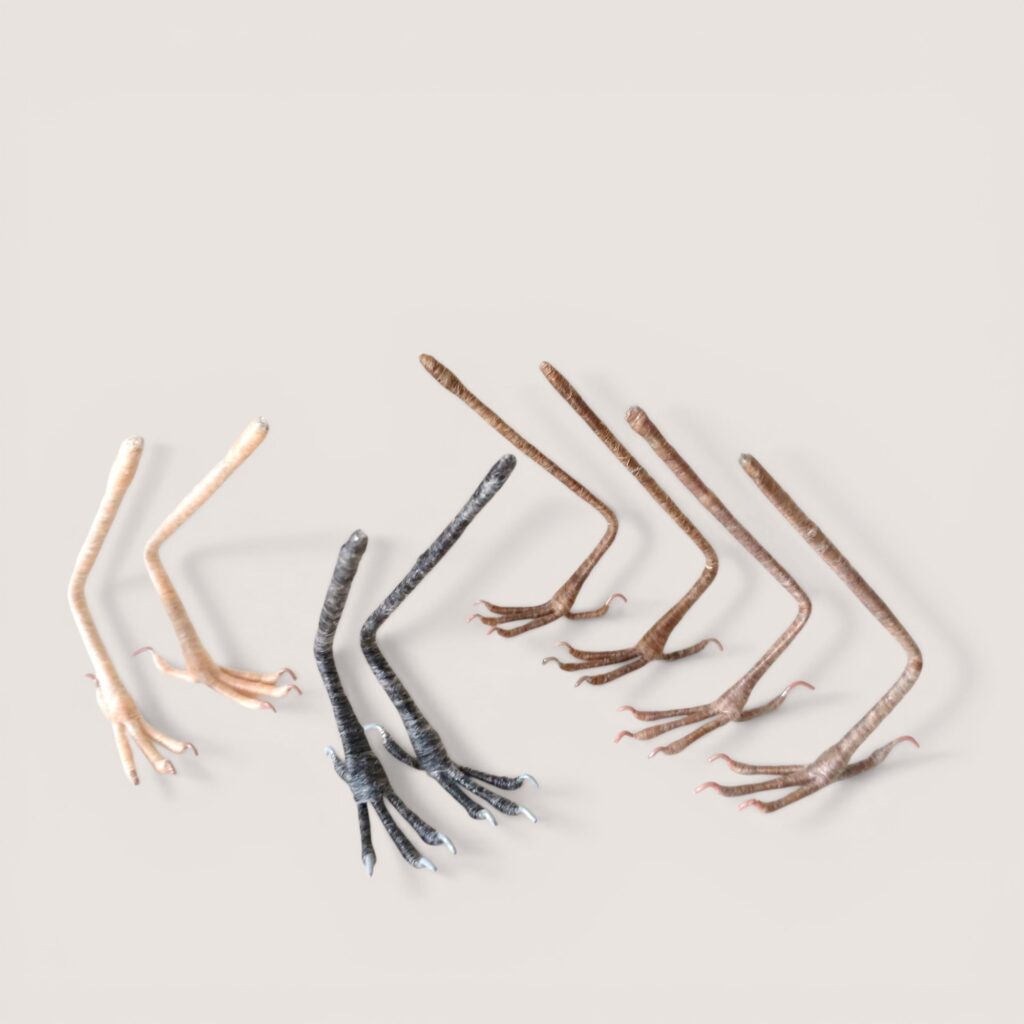
Once you have completed the main body of your needle felted bird, decide how much of the wire leg section needs to sit inside the body.
It helps to understand the shape of the leg first. The foot of the bird is not only the toes. It includes everything up to the first bend in the wire. That first bend acts as the heel of the foot. Everything above that is the leg section that can be inserted into the felted body.
Look at the size and depth of your bird’s belly area, then decide whether the leg section needs trimming. The leg needs to be long enough to sit securely inside the body, but not so long that it pushes too far through the wool or changes the shape of the bird.
In general, a slightly longer inserted section will give more stability. Once you have decided the length, trim both legs evenly with wire cutters.
Step 2: Positioning and alignment
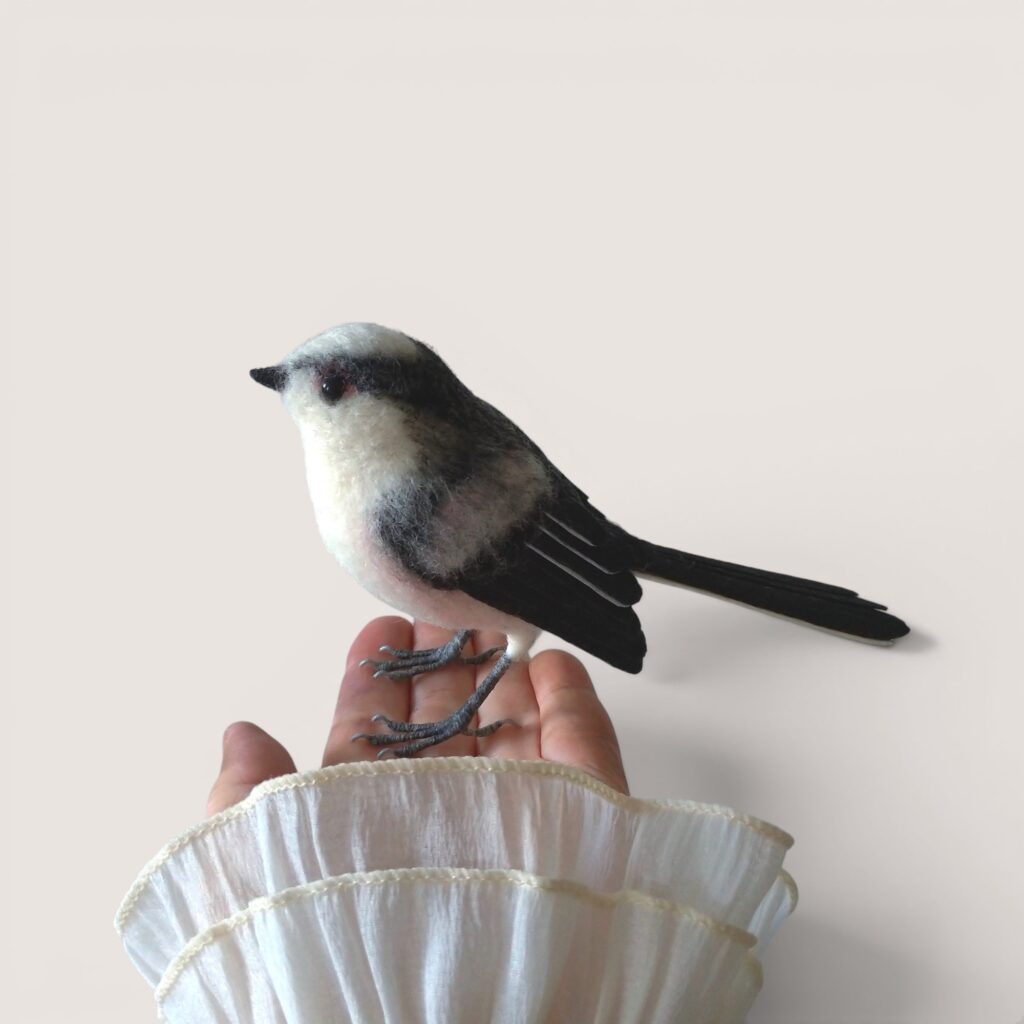
Before making holes in the bird, use a reference image to check where the legs should sit.
A side-view image of the bird species is especially useful. You can search for a side view online and adjust the screen zoom until the bird in the image is roughly the same size as your felted bird. This gives you a helpful guide for where the legs should enter the body.
Another option is to save the reference image into a document, such as Word, and resize it there until it matches the size of your sculpture.
Look carefully at where the legs sit in relation to the belly, chest, and tail. The legs are often not as far forward as you might first imagine.
Give the feet as wide a stance as possible while still keeping the pose realistic. A slightly wider stance will help the bird stand more securely.
When you are happy with the position, mark the two entry points using a ball-headed pin or similar tool.
Step 3: Making the holes
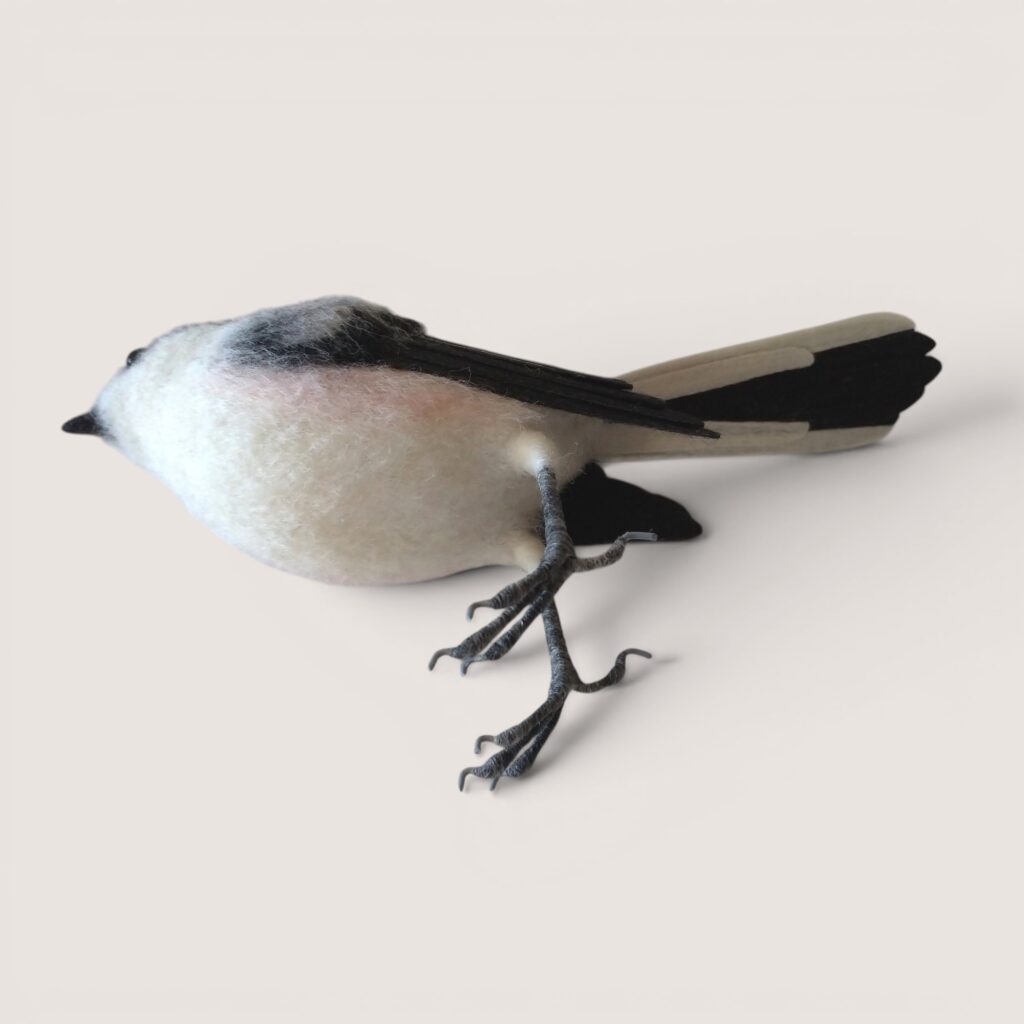
Use an awl, a long needle, or the pointed end of a small pair of scissors to make the holes where you marked the entry points.
Make each hole deep enough to take the full length of the leg section you are inserting. Try to angle the holes in the direction you want the legs to sit, rather than pushing straight up into the body.
Insert each leg without glue first.
This is important because you may need to adjust the angle, spacing, or depth before fixing the legs permanently.
Step 4: Checking balance and final position
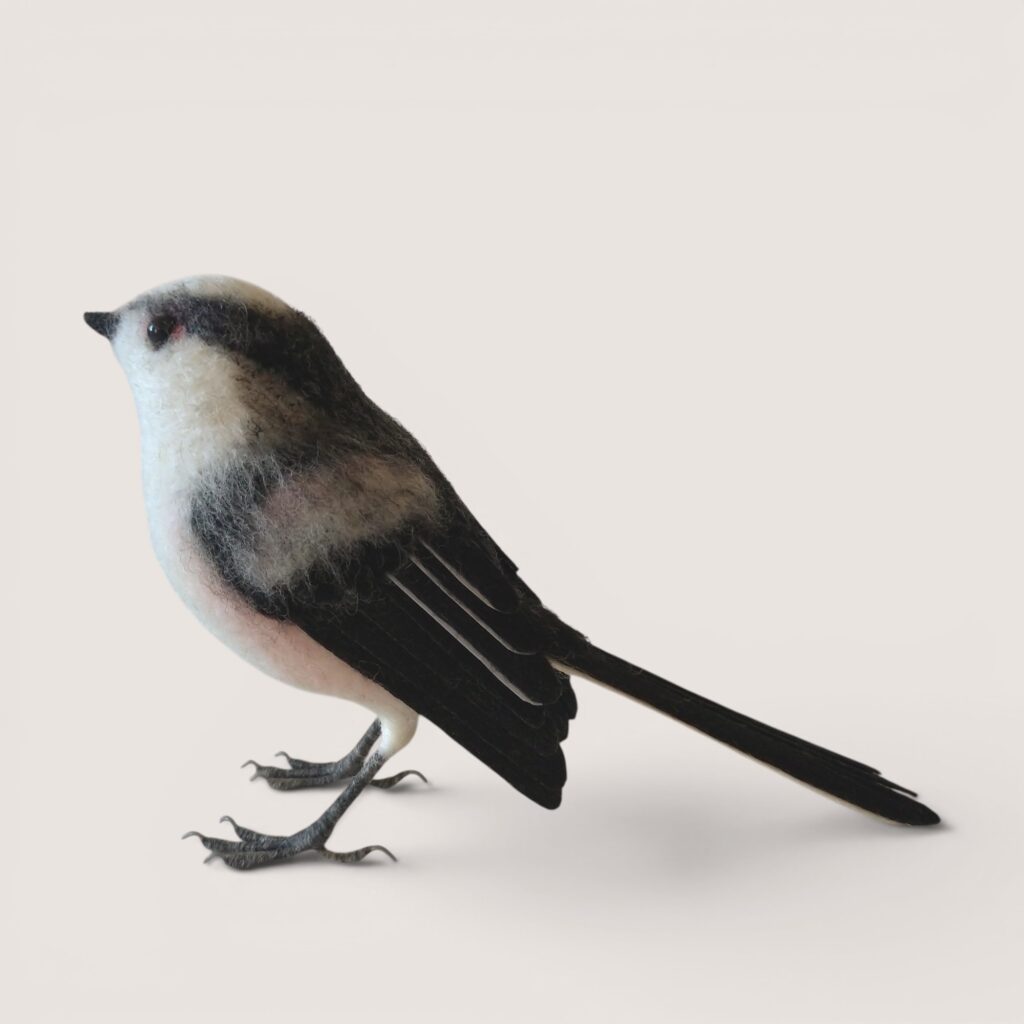
With both legs inserted, stand the bird on a flat surface.
Check the bird from the front, side, and slightly above. Refer back to your side-view image if needed.
Look at:
- whether the bird stands upright
- whether the feet sit naturally under the body
- whether the stance feels balanced
- whether the toes touch the surface properly
- whether the body is tipping forward or backward
You can gently adjust the angle of the legs before gluing.
Once you are happy with the position, remove the legs one at a time, add glue along the inserted leg section, and place them back into the holes.
Hold the bird steady while the glue begins to set, making sure the feet remain in the correct position.
Adding wool around the heel area
If you want to add wool around the heel or upper foot area, do this before the legs are glued into the bird.
It is much easier to add and shape wool around the bend of the foot before the legs are permanently mounted. Once the legs are fixed in place, this area is more awkward to work around.
What to watch out for
A rocking bird is often caused by the toes not sitting evenly on the surface.
Check that each toe is touching the table or display surface. Pay particular attention to the back toes, as these can easily sit slightly high or at the wrong angle.
If one or more toes are floating, the bird may rock even if the legs themselves are positioned correctly.
Small adjustments to the toes and stance can make a big difference to how stable the finished bird feels.
Final thoughts
Mounting bird legs is a small stage, but it has a big effect on the finished sculpture. Taking time to check the leg position before gluing helps your bird stand securely and gives the finished piece a more natural posture.
Grey Wren Studio bird legs are designed for small needle felted bird sculptures and can be trimmed to suit the size and shape of your individual bird.
Next Steps
You can find the needle felted bird legs used in this guide here.
You can browse the Life-Size Bird Templates here: Volume 1, Volume 2
You can sign up for Robin workshop alerts here.
You can browse more posts in Workshops & Learning here.
Until next time,
Rosie